
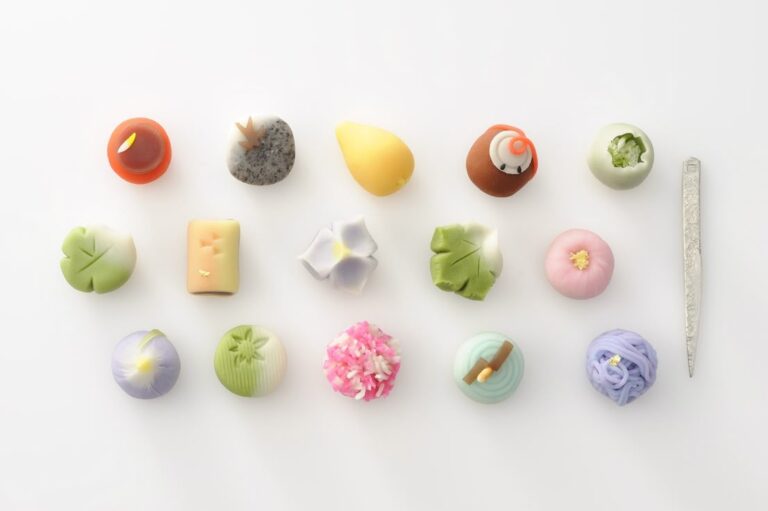
When you think of traditional Japanese sweets, you might picture something small, delicate, and beautiful. That’s wagashi—more than just dessert, it’s a reflection of Japan’s deep connection with nature, seasons, and emotions. These sweets are not only made to taste good, but to be experienced with the eyes, the heart, and the moment.
What Is Wagashi?
Wagashi (和菓子) is the name for traditional Japanese sweets, often served with tea. They’re usually made from natural ingredients like sweetened bean paste, mochi (rice cake), agar, and seasonal fruits or flowers. Unlike Western sweets, wagashi is not too sugary. Instead, it focuses on soft textures, delicate sweetness, and elegant presentation.
There are many types of wagashi, and they change depending on the season, the region, and even the occasion—like New Year’s, tea ceremonies, or cherry blossom viewing.
Seasonal Connection
One of the most special things about wagashi is how it reflects the seasons. In spring, you’ll find sakura (cherry blossom) motifs. In summer, there are cool, jelly-like sweets in blue tones that remind you of water or sky. Autumn brings chestnut and maple leaf designs, while winter sweets use white, soft textures to show snow.
This isn’t just decoration—it’s a way of feeling the season with your senses. Even before taking a bite, you already know: “Oh, it’s springtime.” That kind of emotional connection is a big part of Japanese aesthetics.
More Than Looks: The Spirit of Omotenashi
Wagashi is also about hospitality—what Japanese people call “omotenashi.” It means welcoming guests with heart, care, and respect. When someone serves wagashi with tea, it’s not only a snack. It’s a message: “I want you to feel calm, to enjoy this moment.”
That’s why the design, shape, and meaning of wagashi is so carefully chosen. Each piece is made with attention to detail, even if it’s small. The idea is to offer beauty and kindness together, in a quiet way.
Wagashi and Wabi Sabi
Wagashi also connects with another famous Japanese idea: wabi sabi. This is the idea of finding beauty in things that are simple, imperfect, or changing. Some wagashi are hand-shaped, so no two pieces are the same. Some sweets melt quickly, or look delicate—like they might disappear soon. That’s part of their charm.
You’re not just eating a sweet. You’re enjoying a tiny moment that won’t come back—just like the season, just like a falling leaf. That feeling is wabi sabi.
A Bite of History
Wagashi has a long history. Some types, like yokan (a jelly-like block of red bean paste), were introduced from China centuries ago. Others, like mochi and dango, go back even further in Japanese culture.
The biggest development happened during the Edo period (1603–1868), when tea culture became popular. At this time, wagashi became more artistic and seasonal, designed to match the calm atmosphere of tea ceremonies.
Even today, many wagashi shops use old methods and tools. They continue traditions passed down for generations.
Not Just Old—But Evolving
While wagashi is deeply traditional, it also keeps changing. In modern Japan, you can find wagashi with Western-style flavors like chocolate or coffee. Some designers create wagashi that look like tiny sculptures. Others collaborate with fashion brands or appear in magazines like Hanatsubaki.
This mix of old and new is also part of wagashi’s magic. It stays true to its roots, but it’s not afraid to grow. That balance is very “Japanese.”
Personal Experience
I remember the first time I had wagashi during cherry blossom season. It was a small pink mochi with a salted sakura petal on top. I didn’t expect much, but when I took a bite, it was soft, sweet, and just a little salty. More than the taste, I remember the feeling: the quiet park, the soft wind, and that one moment. That’s when I started to understand that wagashi isn’t just about flavor. It’s about experience.
Why You Should Try It
You don’t have to be in Japan to enjoy wagashi. These days, many wagashi shops ship worldwide, and you can also try making simple ones at home. It’s a fun way to slow down, focus on details, and enjoy a peaceful moment.
Try eating wagashi slowly, with a cup of green tea. Don’t rush. Look at its shape. Think about the season. Even this small act can help you feel more mindful and calm.
Final Thoughts
Wagashi is more than a sweet—it’s a part of Japanese culture, art, and heart. It teaches us to pay attention to the seasons, to welcome others with care, and to find beauty in small, quiet things. In a busy world, wagashi reminds us to pause, enjoy, and appreciate the moment.
So next time you’re feeling stressed or tired, why not try a piece of wagashi? Let it bring you a taste of Japanese seasonal beauty—and maybe, a little peace.